Healthy Snacks for Weight Loss: How Smart Choices Can Actually Help You Shed Pounds
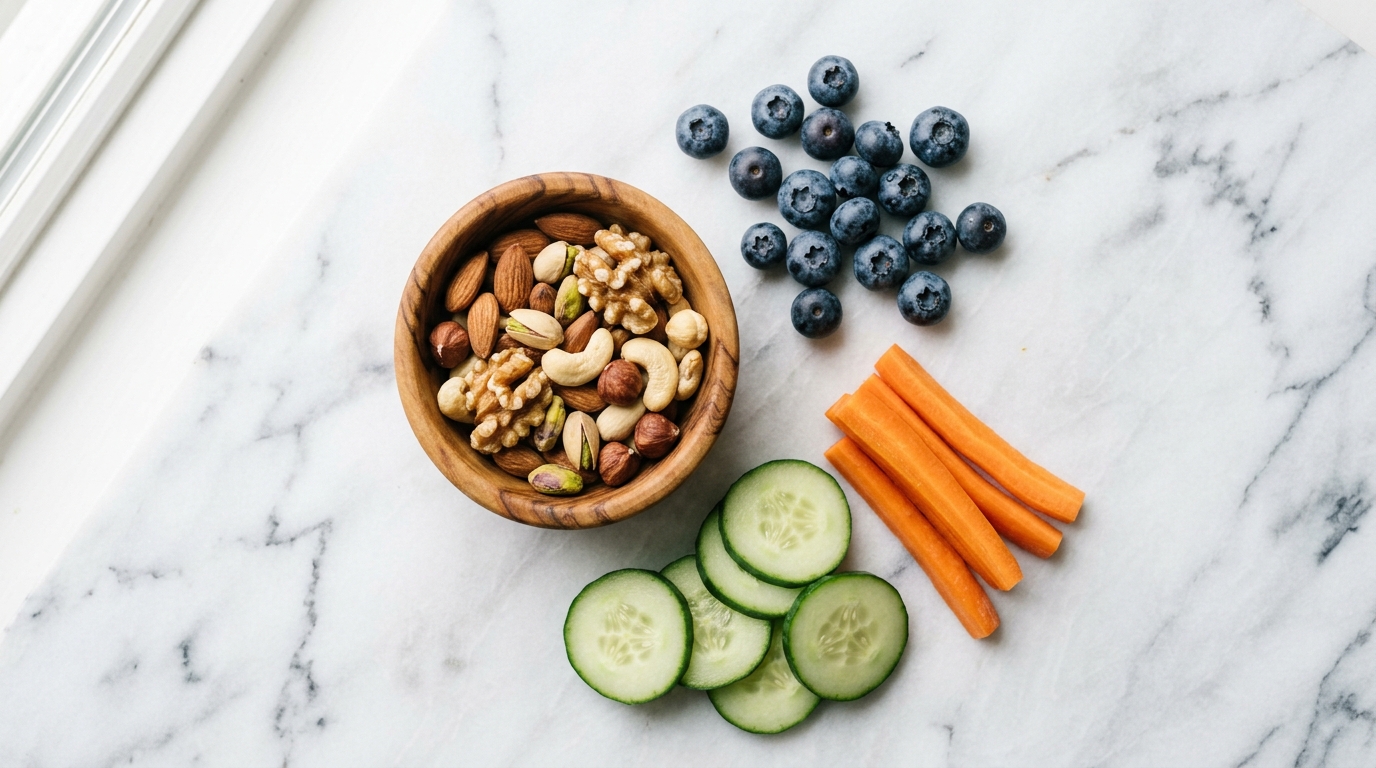
Not all snacking works against weight loss. The type, timing, and composition of snacks has a measurable effect on hunger hormones, calorie intake at subsequent meals, and long-term adherence to a caloric deficit. This guide explains the science of smart snacking — and gives you a practical list of what actually works.
How Snacking Affects Weight Loss (The Hormone Science)
Hunger is not simply "willpower" — it is driven by hormones. Ghrelin rises before meals and signals the brain to eat. After eating, peptide YY (PYY) and glucagon-like peptide-1 (GLP-1) signal fullness and suppress appetite. The macronutrient composition of what you eat directly determines how strongly these hormones respond.
Protein is the most powerful macronutrient for appetite suppression. It stimulates PYY and GLP-1 release more strongly than carbohydrates or fat, and suppresses ghrelin more effectively. Protein also has the highest thermic effect of food — your body burns 20-30% of protein's calories just during digestion, compared to 5-10% for carbohydrates and less than 3% for fat.
A 2025 randomized clinical trial published in PMC compared high-protein yogurt snacks to high-fat snacks in women with overweight and obesity. The high-protein group reported significantly greater afternoon satiety and consumed fewer calories at dinner — without trying to eat less. This is the mechanism behind strategic snacking: the right snack reduces calorie intake at the next meal, more than offsetting its own calorie cost.
The Problem With Most "Healthy" Snacks
Snacks marketed as healthy often fail on closer inspection:
- Granola bars typically contain 200-300 calories with 20-30g of sugar and minimal protein (2-4g) — they spike blood sugar and cause a hunger rebound within 60-90 minutes
- Rice cakes have almost no protein or fat, so they do little to suppress ghrelin despite being low-calorie
- Flavored yogurts often have as much sugar as a dessert, negating the protein benefit
- Fruit juice removes fiber from fruit, delivering fructose without the satiety benefit of whole fruit
- Trail mix is calorie-dense and easy to overeat — portion control is critical
The key principle: a snack that controls hunger at your next meal is worth more than a snack that is merely "low-calorie."
Best Snacks for Weight Loss (With Specific Portion Sizes)
1. Greek Yogurt (Plain, 2% or Full Fat)
A 150g serving of plain Greek yogurt contains approximately 15-17g of protein, 6-8g of fat (2% variety), and around 100-110 calories. It is one of the most satiating snacks per calorie available. Choose plain varieties — flavored versions can contain 15-25g of added sugar. Add berries for flavor and fiber. The combination of casein protein and live cultures may also support gut health.
2. Hard-Boiled Eggs
One large egg has approximately 6g of protein and 70 calories. Two eggs provide a complete protein snack at 140 calories with no added sugar. Eggs contain choline (important for metabolism and liver function) and lutein. Research consistently shows that egg-based breakfasts and snacks reduce calorie intake throughout the day compared to carbohydrate-matched alternatives. Prepare in advance and refrigerate for up to 5 days.
3. Almonds (Measured Portions)
A 28g (1 oz) portion of almonds — approximately 23 almonds — provides 6g of protein, 14g of fat (mostly monounsaturated), 3.5g of fiber, and 164 calories. A 24-week trial found that adding tree nuts to a calorie-restricted diet improved satiety and weight loss outcomes compared to refined carbohydrate snacks. Critical caveat: nuts are calorie-dense, and the portion must be measured. Eating from a bag leads to significant overconsumption.
4. Cottage Cheese
Half a cup (113g) of low-fat cottage cheese delivers 12-14g of protein at 80-90 calories. It is predominantly casein protein, which digests slowly and provides sustained satiety for 2-4 hours. Studies show cottage cheese is as satiating as eggs for the same protein and calorie intake. Add cucumber, tomato, or a small amount of hot sauce for flavor without significant calorie addition.
5. Edamame (Shelled)
A 155g (1 cup shelled) serving of edamame provides 17g of plant protein, 8g of fiber, and approximately 190 calories. It is one of the few plant foods that is a complete protein source (containing all essential amino acids). The high fiber content slows gastric emptying and extends satiety. Fresh or frozen edamame are equivalent nutritionally.
6. Apple with Almond Butter
A medium apple (182g) with 1 tablespoon of almond butter provides approximately 5g of protein, 8g of fat, 4g of fiber, and around 200 calories. The fiber in the apple (pectin, a soluble fiber) feeds beneficial gut bacteria and slows glucose absorption, avoiding the blood sugar spike associated with eating fruit alone. This combination addresses sweet cravings while providing sustained energy.
7. Tuna on Cucumber Slices
One can of water-packed tuna (85g) on cucumber slices is approximately 100 calories with 20g of protein and zero carbohydrates. It is one of the highest protein-to-calorie ratios of any snack. Add a small amount of Dijon mustard, lemon juice, or plain Greek yogurt instead of mayonnaise. This snack is particularly effective when hunger strikes before dinner.
Snack Timing: When to Snack for Weight Loss
Snack timing matters more than most people realize:
- Mid-morning (10-11am): Effective if breakfast was small or early. A protein-focused snack here prevents excessive hunger at lunch that leads to overeating.
- Mid-afternoon (3-4pm): The most important snack window. Cortisol and blood sugar dip between 3-5pm, increasing cravings for high-sugar foods. A 150-200 calorie high-protein snack here prevents the "afternoon crash" and significantly reduces dinner portion size.
- Evening snacking: Generally works against weight loss for most people. If you snack after dinner, the calories are rarely offset by reduced intake elsewhere. If evening hunger is consistent, the solution is usually a larger, more protein-rich dinner rather than adding a snack.
Frequently Asked Questions
Does snacking slow your metabolism?
No — meal frequency has minimal direct effect on metabolism. What matters is total calorie intake. However, snacking can indirectly support weight loss by preventing the extreme hunger that leads to overeating at meals. The key is choosing snacks that reduce subsequent calorie intake rather than simply adding calories.
Is it better to snack or not snack when trying to lose weight?
It depends on the individual. Some people lose weight more easily with 3 structured meals and no snacking (the hunger between meals motivates larger caloric deficits). Others lose more consistently with 2 meals and 1-2 protein-focused snacks that prevent binge eating. Neither is universally superior — the best approach is the one you can sustain.
Smart snacking is part of a bigger nutritional picture. Learn how your gut microbiome influences hunger, cravings, and how your body processes the nutrients in those snacks. If the cost of healthy eating is a concern, our guide on why eating healthy feels expensive — and what to do about it — is worth reading before your next grocery run.
What is the best late-night snack for weight loss?
If late-night hunger is unavoidable, cottage cheese is the best choice. Its slow-digesting casein protein may support muscle retention during overnight fasting. Aim for 100-150 calories maximum. Avoid high-sugar options — insulin spikes before sleep can disrupt fat-burning hormones overnight.


Comments
Post a Comment